
Issue 002 / The art of hospitality
A Seat at
the Table.
A restaurant is more than the thing on the plate. Its photographs can make room for everything that brings a meal to life.
Words & imagery by William Davis Moore
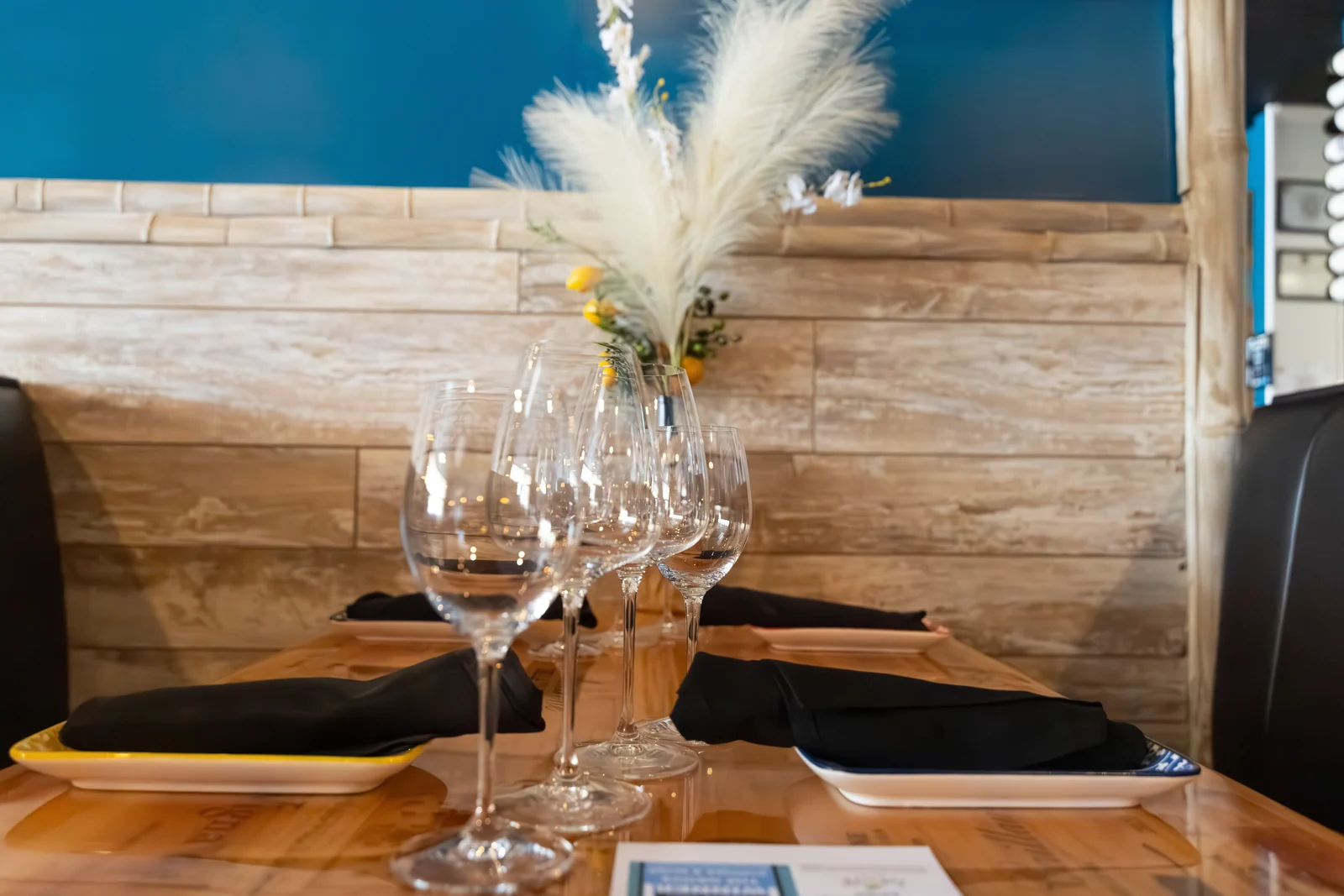
Before there is a meal, there is a place for it. In this photograph from my archive of The Grove, the glasses are already on the table. The blue wall and warm wood give the setting its character. A chair just outside the frame is enough to suggest the person who might occupy it. Nothing needs to be served yet for the photograph to have a subject.
01 / The invitation
Begin with a place.
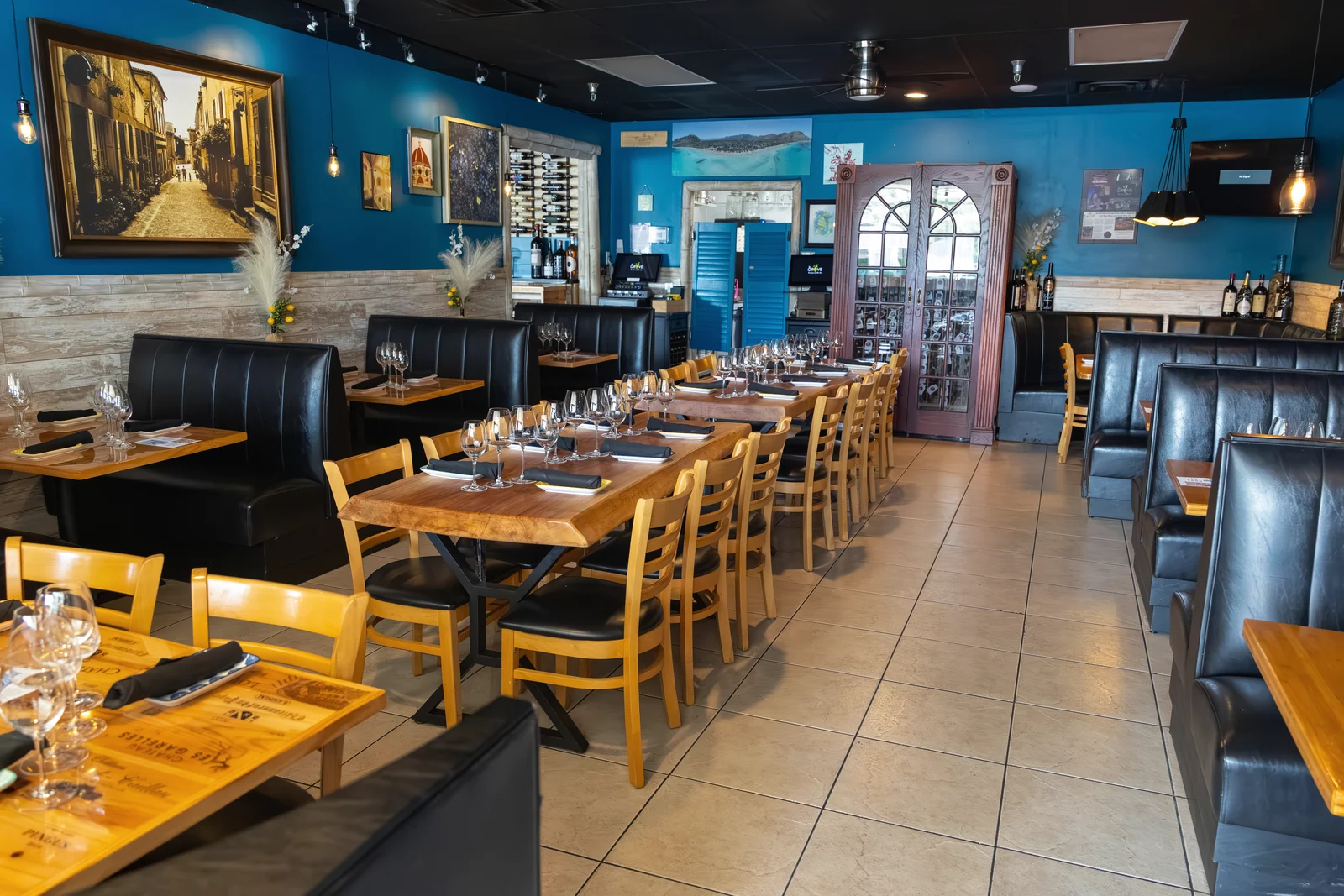
A photograph of a dining room offers a different kind of information from a photograph of pasta. It tells us how the tables sit together, what the light feels like, and what the room looks like when it is ready for people. The row of wooden chairs, dark booths and blue walls at The Grove make a recognizable visual world before we ever see a menu.
When planning restaurant photography, I would give the space its own place in the sequence. A wide view establishes the room; a closer view of a set table suggests the scale of the experience. The closer image is not just decoration. It gives the viewer somewhere to imagine sitting.
02 / Behind the room
What the table does not show.
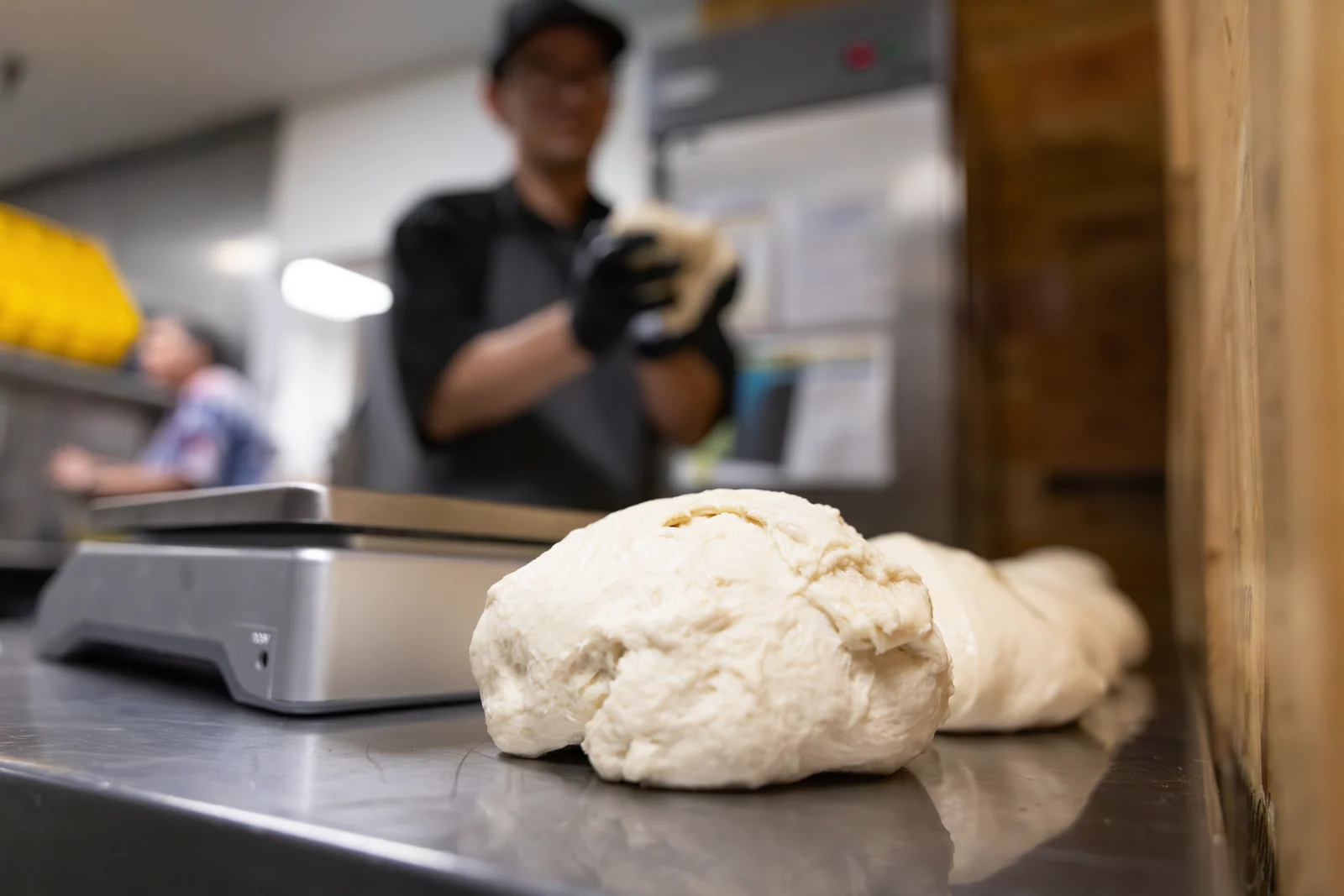
The kitchen photograph changes the register entirely. Instead of polished glass or finished plates, there is a piece of dough on a steel counter. A figure is softly visible behind it. The contrast between the surfaces in these two spaces is part of the story.
There is value in letting preparation appear without making every image a portrait or a performance. A piece of dough, a working surface, a utensil ready for use: small, specific things can suggest the labor that a finished dish rarely reveals. The camera does not need to explain an entire kitchen to make that work visible.
03 / A gesture
Let the food be in motion.
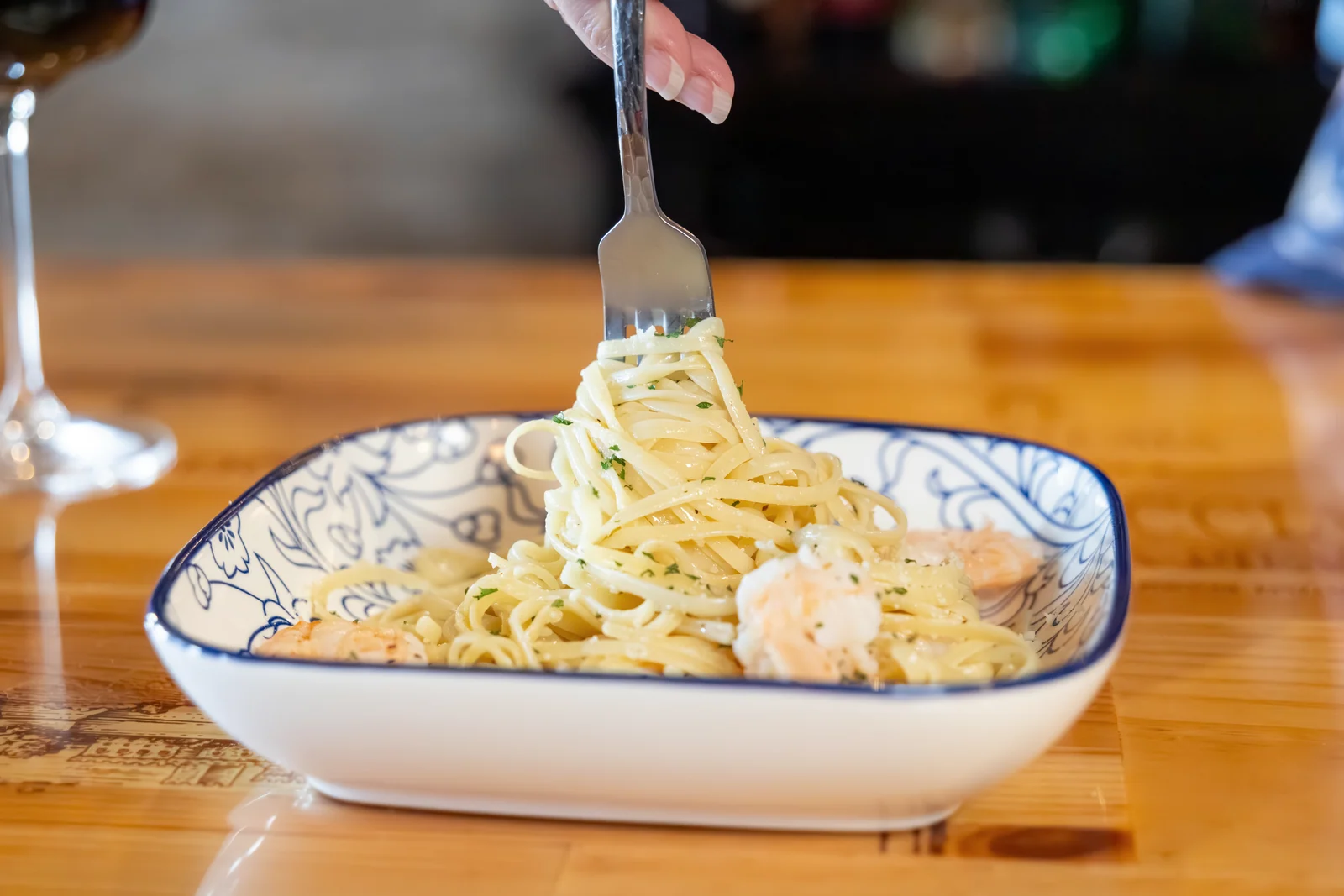
The fork changes what this bowl of pasta can communicate. The strands have a direction, a point of tension and a relationship to the plate beneath them. A static image holds the instant between two movements.
A restaurant menu still needs clear, useful photographs of its dishes. But an editorial collection can make room for a second kind of image: the moment a dish becomes part of the meal. A raised fork can give scale and texture without requiring elaborate props or a complicated effect. It is the ordinary gesture that makes the photograph particular.
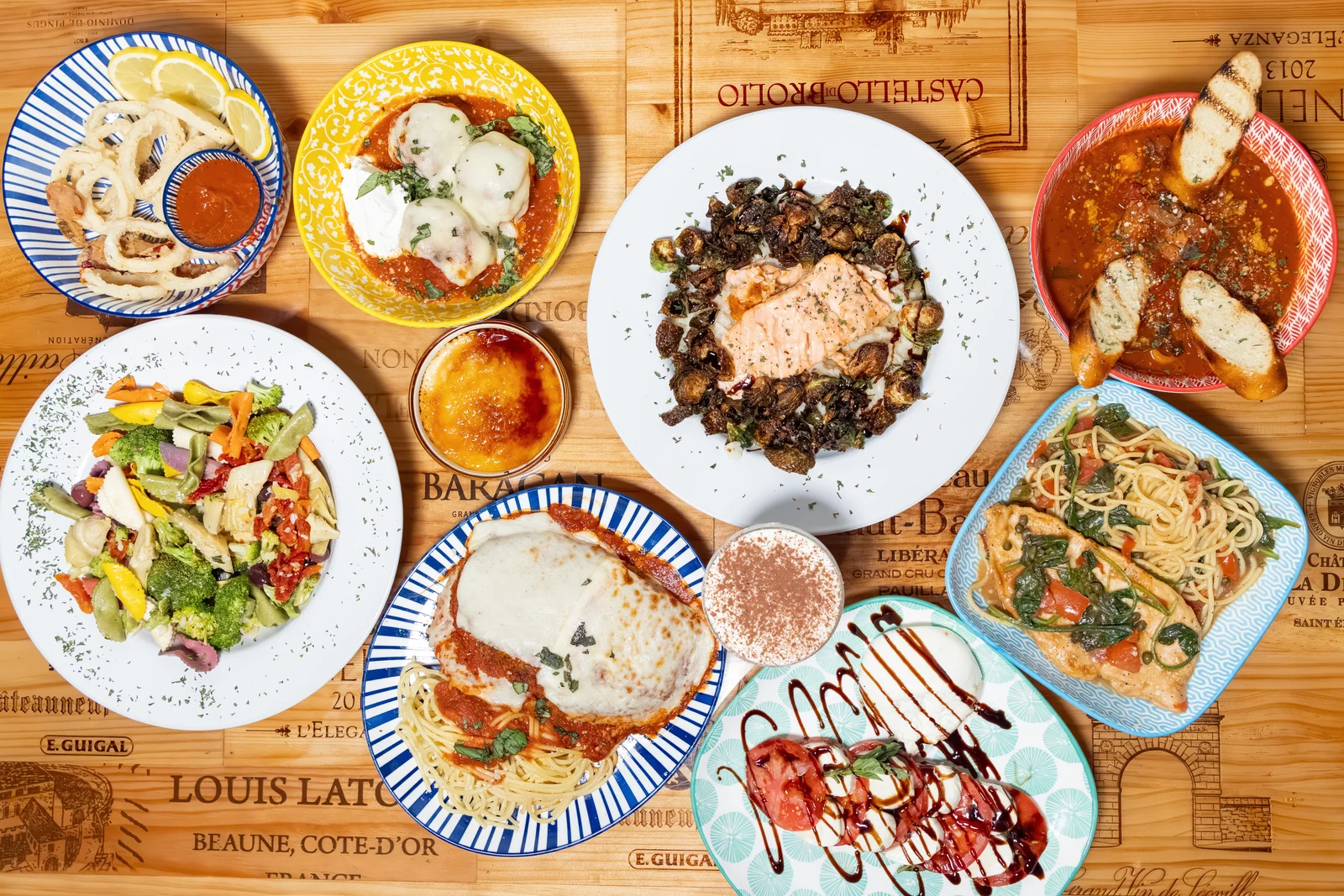
04 / The shared table
Give abundance a shape.
Seen from above, these dishes are a collection of circles, angles, colors and spaces. The patterned ceramics carry some of the character of the room into the food. Different plates have different visual weights, yet they belong to the same table.
For a restaurant website, an image like this can do work that individual menu photographs cannot. It shows variety together rather than describing each item separately. The key is to give every plate enough space to remain legible. A crowded frame is not automatically a generous one.
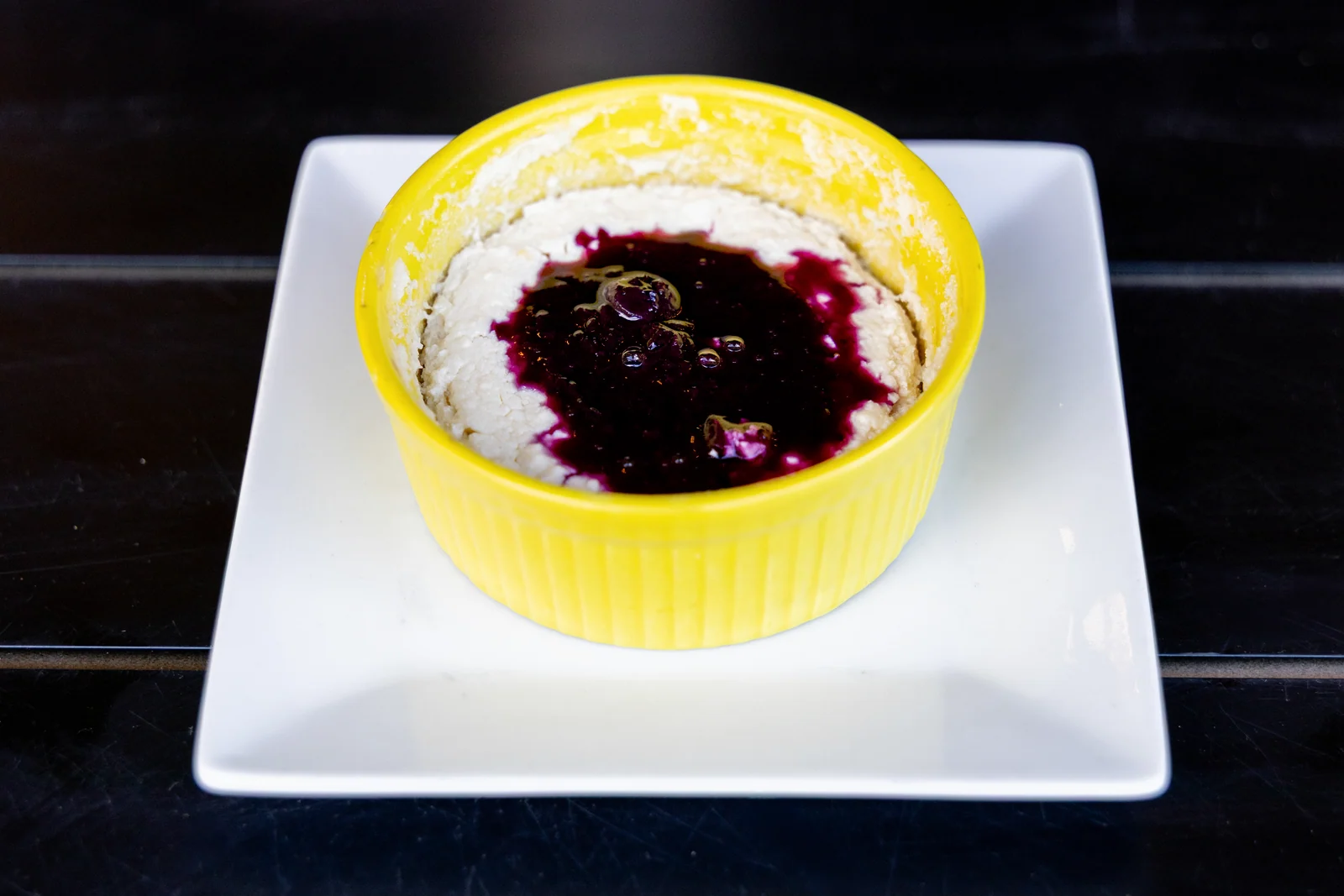
05 / The last detail
Leave room for the quiet moment.
A yellow ramekin, a white plate and a dark topping form a much simpler photograph. After the full table, the isolated dessert feels like a change in pace. The contrast is useful even when the pictures were not captured in the order they are presented here.
An editorial sequence does not need to finish with its loudest image. Especially at this time of year, when many of us gather around a table, I find it interesting to consider the quieter parts of the experience: the space prepared beforehand, the small gestures in between, and the dish that asks for one last look.
For a South Florida restaurant planning its next photography or video shoot, think of the image collection as a guest’s visual introduction. The room, the preparation, the food and the gesture need not compete. Let each photograph tell the part of the story that the others cannot.
Photographs from William Davis Moore’s The Grove Cucina & Wine archive. The sequence is an editorial arrangement, not a claim about the order of capture, a current menu, opening hours, a Thanksgiving service, or a client’s results.